
Myth Check · August 9, 2026 · 5 min · By Zeke Marchetti
Myth Check: Can Chest Exercises Get Rid of Gynecomastia?
Push-ups and bench presses build muscle, but they cannot shrink glandular breast tissue. Here is what the physiology actually says, and how to tell which kind of chest fullness you are dealing with.
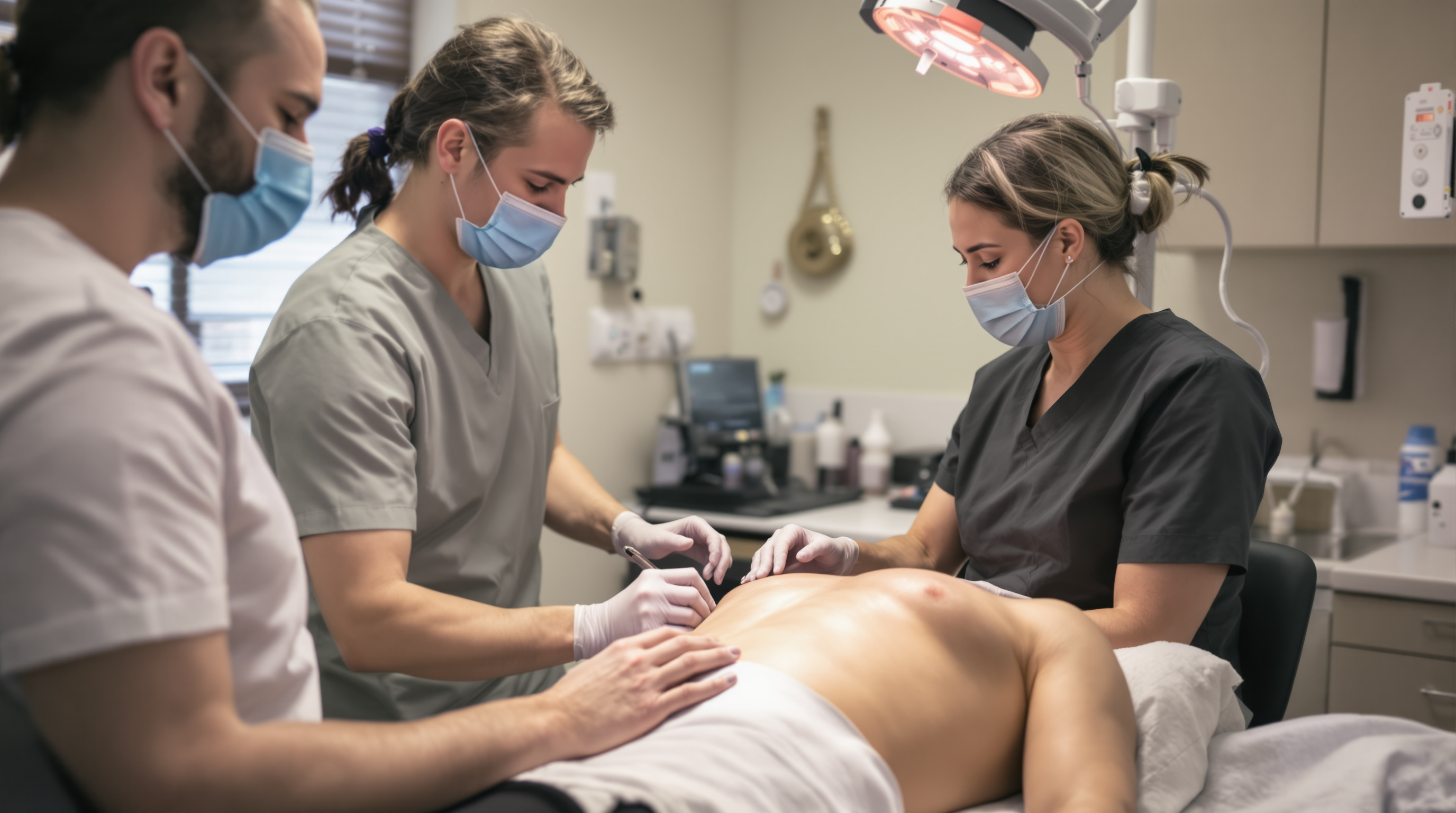
Search any fitness forum and you will find the same advice repeated to men who are self-conscious about their chests: hit the incline bench, do more push-ups, add cable flyes. The logic sounds reasonable. Build the pectoral muscle, tighten the area, and the fullness goes away. For a specific group of men, that advice is not just unhelpful. It is anatomically impossible to follow to a good outcome, and understanding why requires separating three different tissues that can make a male chest look full.
Three tissues, three different behaviors. The male chest contains skeletal muscle (the pectoralis major and minor), subcutaneous fat, and a small amount of glandular breast tissue behind the nipple-areolar complex. Every male has this gland. In most men it stays rudimentary, a firm disc roughly the size of a coin or smaller. True gynecomastia is the benign proliferation of that glandular tissue, typically driven by a shift in the ratio of estrogen activity to androgen activity at the breast tissue level. Common triggers include puberty, aging-related testosterone decline, certain medications such as spironolactone and some antipsychotics, anabolic steroid use and its aftermath, liver or kidney disease, and in rarer cases hormone-secreting tumors.
Why exercise cannot touch the gland. Resistance training does two things relevant here. It hypertrophies muscle fibers, and combined with a caloric deficit it can reduce total body fat, which over time reduces chest fat along with fat everywhere else. What it does not do is alter glandular tissue. Breast gland is not metabolically responsive to exercise the way adipose tissue is. It does not shrink when you burn calories, and it sits on top of the muscle, not within it. In fact, for lean men with true gynecomastia, building a larger pectoral muscle can push the gland forward and make the puffiness more visible, not less. This is a common frustration among bodybuilders, where anabolic steroid use adds a hormonal driver on top of low body fat, producing a small but prominent gland on an otherwise defined chest.
Pseudogynecomastia is the exception. When chest fullness is caused primarily by subcutaneous fat rather than gland, the condition is called pseudogynecomastia or lipomastia. Here, weight loss genuinely helps, though with a caveat: fat loss cannot be targeted to one region. The idea of spot reduction has been tested repeatedly in exercise science, and localized training does not preferentially mobilize fat from the trained area in any clinically meaningful amount. A man with pseudogynecomastia will see his chest slim down as his overall body fat percentage drops, not because of chest-specific exercises.
How to tell the difference at home, roughly. Clinicians use a simple pinch examination. Lying flat, place the thumb and forefinger on opposite sides of the breast and slowly bring them together toward the nipple. Glandular tissue feels like a firm, rubbery, sometimes tender disc concentric with the areola, distinct from the softer surrounding fat. Pure fat compresses smoothly with no discrete mound. Many men have a mixed picture, some gland and some fat, which is why outcomes from diet alone vary so much. This self-check is a starting point, not a diagnosis. Any unilateral mass, hard or fixed tissue, nipple discharge, or skin changes warrants medical evaluation, since male breast cancer, while rare, presents in this region.
What actually resolves true gynecomastia. Timing matters. Pubertal gynecomastia resolves on its own in the majority of adolescents within one to two years as hormone levels stabilize. Medication-induced cases may regress if the drug is stopped early, because young glandular tissue is still soft and reversible. The problem is fibrosis. Glandular tissue that has been present for roughly twelve months or longer tends to become fibrotic, meaning it develops dense connective tissue that no hormonal correction, medication, or lifestyle change will reverse. At that stage, the established options are surgical: direct gland excision, often through a small incision at the areolar border, frequently combined with liposuction to blend the surrounding contour. Liposuction alone addresses the fat component but leaves the gland behind, which is why mixed cases usually need both techniques.
The bottom line. Chest training is worth doing for strength, posture, and overall composition, and it is the right primary tool for pseudogynecomastia driven by excess fat. But if a firm disc of tissue persists behind the nipple after meaningful fat loss, no volume of push-ups will remove it, because muscle contraction has no mechanism by which to shrink gland. Men in that situation are not failing at fitness. They have a structural tissue issue with well-understood causes and well-established treatments, and the most useful next step is an evaluation that includes a hormonal and medication history, not another training program.
Related reading: Gland or Fat? How Clinicians Actually Tell Gynecomastia From Pseudogynecomastia, and Why It Changes Everything.
Further reading: Liposuction Assisted Gynecomastia Surgery With Minimal Periareolar Incision: a Systematic Review (Aesthetic Plast Surg 2022); Available techniques to minimize scars in surgical management of gynecomastia - a comprehensive review (JPRAS Open 2024); Contemporary Management of Gynecomastia (Clin Plast Surg 2022).