
Technique · July 7, 2026 · 5 min · By Willa Petrakis
Where male liposuction incisions go, and how the scars heal
Incisions are measured in millimeters and placed where the body naturally hides them.
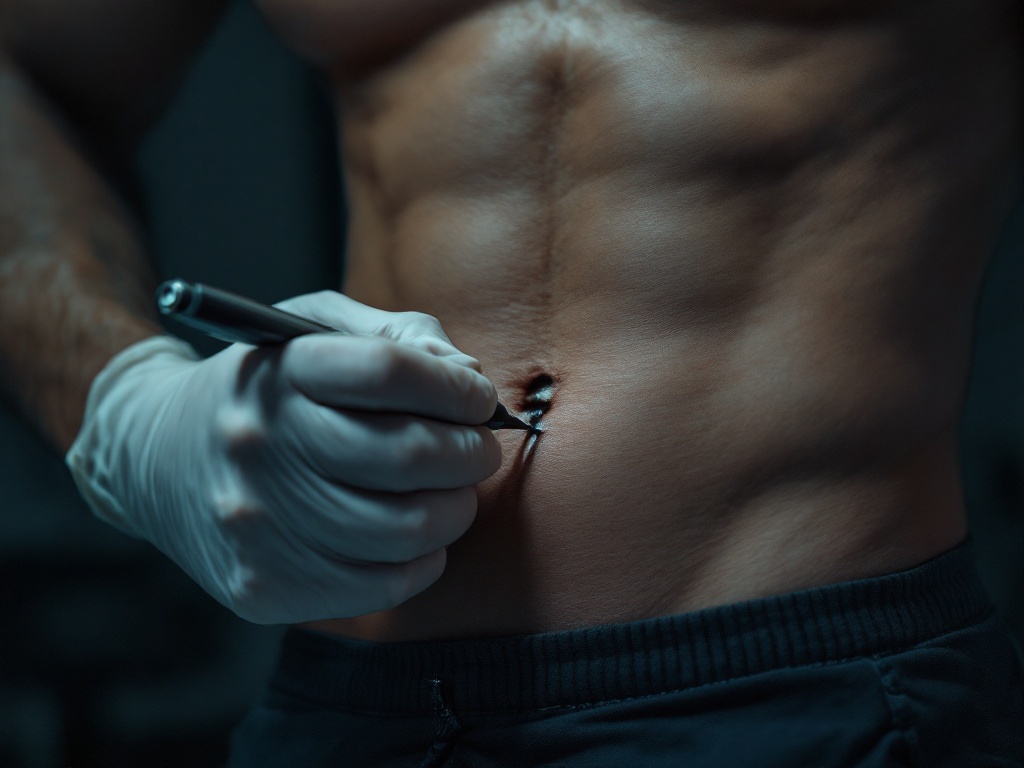
Liposuction incisions are small, usually three to five millimeters, and an experienced surgeon places them inside natural creases and low-visibility zones, which is why most men find the resulting scars hard to spot within a year of surgery.
Placement follows the treatment area, and the logic is always the same: hide the access point where skin folds, hair, or clothing lines already conceal it. For the abdomen, incisions typically sit inside or just beside the navel and low along the waistband line. Flank and lower back work uses points within the beltline, where waistbands cover them. Chest liposuction reaches through the armpit fold or the lower border of the areola, and chin and neck treatment hides its entry in the crease under the chin and sometimes behind the earlobes. The American Society of Plastic Surgeons describes these small, inconspicuous incisions as a standard feature of the procedure.
The reason the scars stay small is the instrument. A liposuction cannula is a thin tube, so the incision only needs to admit its diameter; it is an access point, not a cut across the treated area. The tumescent solution infused first also limits bleeding and bruising around each site, which supports cleaner healing. StatPearls, hosted by the NIH National Library of Medicine, details the technique and its small-incision approach.
Healing follows a predictable arc. In the first weeks each site looks like a small pink or reddish mark, sometimes slightly firm to the touch, and drainage in the first days is normal. Over the following months the marks flatten and fade toward the surrounding skin tone, with full scar maturation taking up to a year. Sun protection on healing scars matters more than most men expect, since new scar tissue darkens easily with UV exposure, and skin quality influences how cleanly each mark settles. Not smoking and following the surgeon's aftercare, sometimes including silicone gel or sheeting, round out the basics.
Gynecomastia work is the one place men should expect a slightly longer scar. When firm glandular tissue must be excised, as in mild gynecomastia with puffy nipples, the incision follows the lower edge of the areola so the mature scar blends into the natural border between areola and chest skin. Done well, it is discreet, but it is a real incision rather than a millimeters-wide access point, which is worth understanding going in.
The practical takeaway is that scarring is rarely the limiting factor in male liposuction when placement and aftercare are handled well. Ask a prospective surgeon where each incision will sit and look for healed male results in their gallery, the same diligence that applies to choosing a surgeon for male body contouring generally. Small marks in hidden places, faded over a year, are the realistic expectation.
Related reading: Male liposuction recovery: what to expect.